
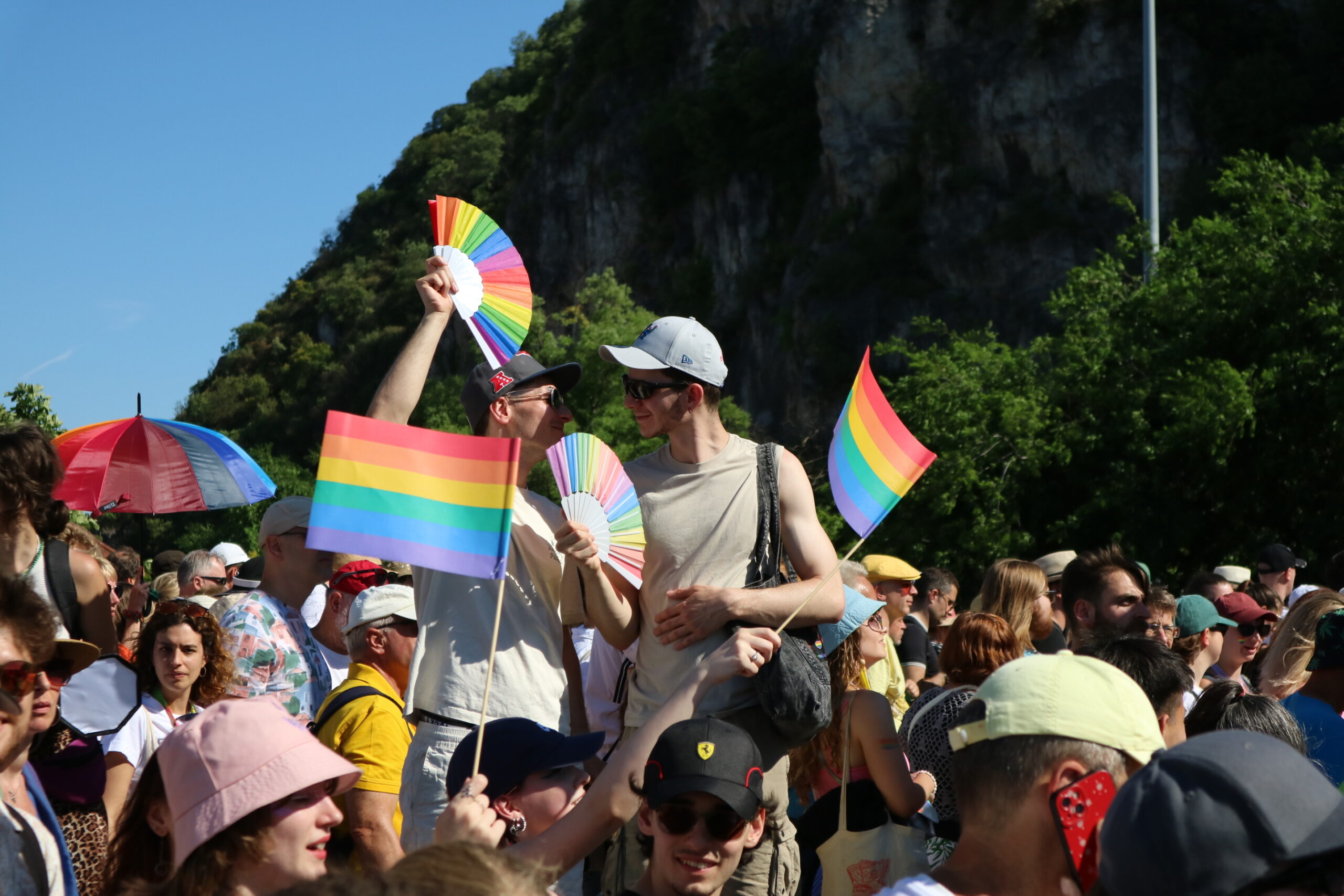
The ban on Pride in Budapest in late June was by far the most visible attack on the LGBTQ+ community in Europe. What does the future hold?
“I am not afraid,” said Maria Takács on the eve of the banned Pride in Budapest at the end of June. “In 2007, we were confronted for the first time by aggressive counter-protesters who threw stones at us. The police were unprepared and initially let them off the hook. A year later, officers in combat gear formed a cordon around the Pride, but that was barely enough. I’m used to some things.”
Maria is the co-founder of Labrisz, a lesbian association that has focused on empowering lesbian, bisexual, and transgender women in Hungary since 1999. They achieve this through cultural activities, educational programmes, and community building.
In the cluttered little office where Labrisz organizes its activities, Maria finds a moment to talk. One floor up, several dozen women have gathered in an empty room. They are making protest signs and banners that they will take to the streets tomorrow.
Especially younger women have shown up. However, they feel less confident. There are threats to use AI technology to recognise faces and there is uncertainty about what the police will do during the march. This sows doubt in these women’s minds. They don’t want to be recognised in photos. They also want to ensure that their tattoos and other distinctive features are not visible.
(…)
Leave a Reply